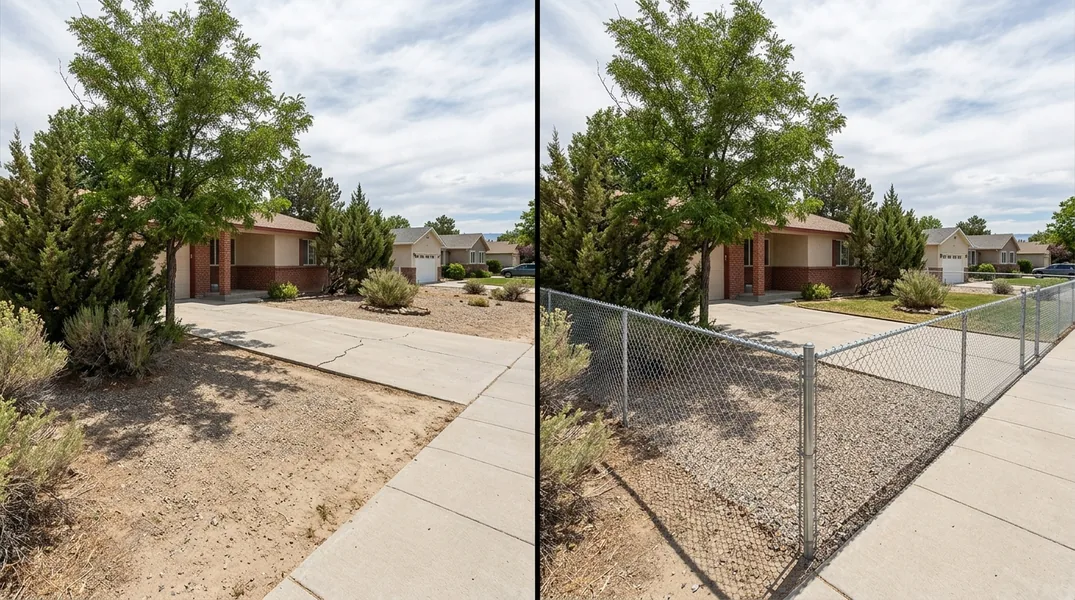
Understanding Reno's Unique Weather Challenges
Reno sits at over 4,600 feet elevation in the high desert, which means your fence faces a one-two punch of environmental stress that most homeowners don't anticipate. The Sierra winds can gust over 40 miles per hour, especially during spring and fall, while winter snow loads and freeze-thaw cycles create structural pressures that few fencing materials can withstand without proper planning and maintenance.
If you've lived in Reno for more than a few years, you've probably noticed how quickly weather can change. A clear morning can turn into a whiteout afternoon, and those wind gusts that rattle your windows also work against your fence panels, posts, and gates. The combination of moisture from snow melt, intense UV exposure at our elevation, and relentless wind creates an environment where inferior fence installation or poor material choices fail quickly. Understanding these challenges is the first step toward choosing a fence that will actually last.
How Wind Damage Compromises Your Fence Structure
Wind doesn't just push on your fence; it creates a complex pattern of stress that tests every connection point, every post depth, and every panel attachment. When gusts hit a fence panel, they create lateral pressure that tries to bend or twist the structure. If your posts aren't set deep enough in concrete, or if your panels aren't properly braced, that wind force travels directly to the weakest link, which often fails first. Many homeowners discover this problem after a particularly strong wind event, when a panel suddenly leans or a section separates from its posts.
The risk increases significantly if your Wood & Privacy Fence Installation wasn't completed by experienced professionals who understand Reno's specific wind patterns. Posts must be buried below the frost line (typically 36 to 48 inches in our region) and set in concrete with proper diameter and depth ratios. Panels need adequate bracing, and boards or slats must be securely fastened, not just nailed with a few fasteners. When wind hits, every connection point matters. A fence installed to minimum code standards might survive a light breeze but fail under the Sierra's real-world gusts.
Winter Snow Load and Freeze-Thaw Cycles
Heavy snow accumulation on fence panels creates vertical pressure that many homeowners don't anticipate. A foot of wet snow can add hundreds of pounds of weight to a single fence section, and if that snow then freezes and thaws repeatedly through the winter, the wood expands and contracts, creating stress fractures and loosening fasteners. This cycle is particularly harsh on Wood & Privacy Fence Installation because wood is naturally hygroscopic, meaning it absorbs and releases moisture based on humidity and temperature. In Reno's winter, that process accelerates dramatically.
Freeze-thaw cycles also affect your fence posts and the concrete around them. Water seeps into the soil, freezes, expands, and can actually heave your posts upward, throwing off the entire fence alignment. This is why proper drainage around fence posts is critical, and why some homeowners in Reno find their fences gradually settling or leaning after their first harsh winter. If you're considering a new fence installation, ask your contractor about how they manage snow load and frost heave in their design and installation process.
Pool Fence Code Requirements and Weather Resistance in Reno
If you have a pool or are planning one, pool fence code requirements in Reno are non-negotiable, and those requirements actually provide excellent guidance for weather-resistant fence design. The Washoe County Code mandates that pool fencing meet specific pool fence height requirements, typically a minimum of 4 feet for residential pools, and the fence must be constructed to prevent unauthorized access. More importantly for weather durability, these codes require that fencing materials be capable of withstanding the environmental stresses of our region, which means proper material selection and installation standards.
A properly installed pool fence installation that meets code requirements will also resist wind and snow damage better than a standard residential fence. This is because code-compliant installations emphasize structural integrity, proper post spacing, and secure fastening. Additionally, self closing pool gate mechanisms must function reliably even in extreme weather, which means the entire fence structure needs to be stable and properly aligned. If you're installing a pool fence in Reno, working with professionals who understand both code requirements and local weather patterns ensures you get a fence that's both legal and durable.
Material Selection for Reno's Harsh Environment
Not all fencing materials perform equally in Reno's climate. Wood & Privacy Fence Installation offers beauty and natural aesthetics, but wood requires regular maintenance to survive our weather. Pressure-treated lumber resists rot better than untreated wood, but even pressure-treated boards need periodic staining or sealing to maintain their integrity. Cedar and redwood naturally resist decay better than pine, but they cost more and still need maintenance. If you choose wood, plan on sealing or staining your fence every two to three years in Reno's climate.
Vinyl & PVC Fence Installation offers a lower-maintenance alternative that handles wind and snow well. Vinyl doesn't absorb moisture, so freeze-thaw cycles don't damage it the way they damage wood. It won't rot, warp, or splinter, and it requires only occasional cleaning. However, vinyl can become brittle in extreme cold, and very strong winds can still stress the connections. Aluminum & Ornamental Iron Fencing is lightweight and won't rust if properly finished, but it requires secure installation to resist wind. Chain Link Fence Installation is durable and wind-resistant due to its open design, which allows wind to pass through rather than creating pressure against solid panels.
Professional Installation and Maintenance: Your Best Defense
The most important factor in fence durability isn't the material alone; it's how the fence is installed and maintained. A poorly installed vinyl fence will fail just as quickly as a poorly installed wood fence. Professional installers in Reno understand that posts must be set deeper than the minimum code requirement, concrete must be properly mixed and allowed to cure fully, and all connections must be inspected for tightness and proper fastening. When you're getting a free estimate from a fence contractor, ask specifically about their installation process for wind resistance and winter durability.
Regular maintenance extends your fence's life significantly. Inspect your fence after major wind events and heavy snow, looking for loose boards, separated panels, or leaning posts. Clear snow accumulation from fence panels rather than allowing it to build up. Check that all fasteners remain tight, and address any damage promptly before it spreads. If you have wood fencing, keep the sealant or stain current. These simple steps, combined with professional installation, can add years to your fence's life. Reno Fence Company can help you understand the maintenance needs of your specific fence type. Call us at (775) 993-4968 to discuss your fence's durability or to get started with a new installation designed to withstand our region's unique weather challenges.
Looking for a professional fence contractor in Reno? Reno Fence Company responds fast for all your fence needs.
Get a Free Quote