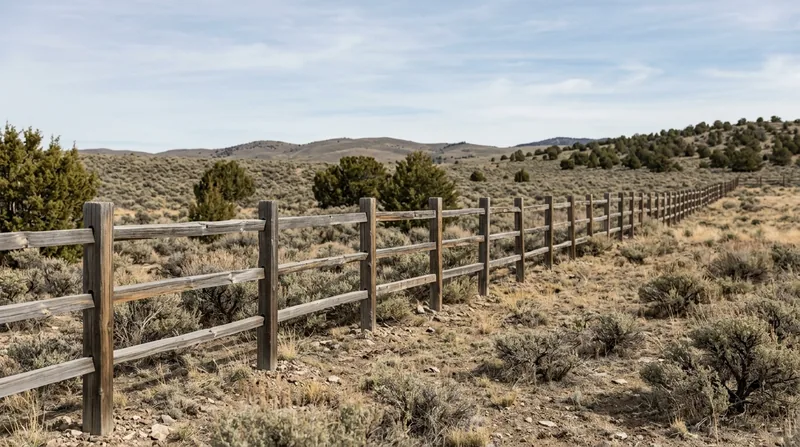




Farm fence installation in Reno means building barriers that hold against constant open-desert wind across valley-floor runs where cattle and horses graze. From Spanish Springs to Lemmon Valley and beyond, property owners rely on durable fencing to contain livestock, define boundaries, and protect investment on acreage where traditional residential fencing fails. We set posts through gravelly alluvium and rock, space rail height for the animals you keep, and build systems that survive the exposure and seasonal stress of Northern Nevada rangeland. Since 2014, we have installed and repaired split rail, pipe, no-climb horse fence, and barbed wire systems across the Greater Reno area. The work is straightforward: solid posts in concrete, proper spacing, and materials chosen for the job at hand.
Why Farm and Ranch Fencing Matters on Reno-Area Properties
Acreage owners in Reno, Sparks, Sun Valley, and surrounding communities face real fencing challenges that suburban privacy fence cannot solve. Livestock containment requires specific post spacing, rail height, and durability standards. Open-desert terrain and exposure demand materials and installation methods proven to resist wind load and settling over years. A poorly set fence post or undersized rail will fail under the weight of a horse or the constant pressure of cattle against the line. Proper ranch fence installation protects your animals, prevents liability from escaped livestock, and establishes clear property boundaries on rural land where disputes over fencing responsibility are common.
- We set posts deep in concrete to resist frost heave and wind load on exposed valley floor runs.
- We space rails and boards according to the animals you keep, whether cattle, horses, or mixed herds.
- We use galvanized or powder-coated hardware to prevent rust in the dry Reno climate.
- We comply with local setback and height rules, which vary by county and jurisdiction across the service area.
The result is a fence that earns its cost and holds its line for years.
Key info: Washoe County and City of Reno have separate setback and height rules for property fences. Before we mark and set your line, we recommend you verify local requirements with your county assessor or city planning department, especially if your property is near a corner lot or abuts a public road. We work from the boundary you identify and install on that line.
For more details on fence regulations and permitting, visit the Washoe County government website or contact your local building department.
How We Install Farm and Ranch Fencing in Reno: Our Process
Farm fencing is not guesswork. We begin with a site walk to assess soil conditions, drainage, terrain slope, and wind exposure. We confirm the property line with you, mark the fence run, and call Nevada 811 to locate utilities before we dig. We set posts at intervals matched to your animal type and the materials you choose, tamping or setting in concrete depending on soil and load. We install rails or boards plumb and level, use anti-sag bracing on long runs, and finish with proper caps and trim to shed water and extend post life. We test gate operation and latch hardware before we leave the job.
- We walk the property, identify soil and drainage conditions, and assess wind and terrain exposure.
- We call Nevada 811 to locate underground utilities before any post holes are dug.
- We set posts at the spacing required for your livestock and the material you have chosen.
- We install rails or boards plumb and level, with proper anti-sag bracing on exposed runs.
- We finish with caps, trim, and hardware that sheds water and resists corrosion in the dry climate.
The entire process is documented, and we provide a walk-through before final payment.
Local example: A property owner in Lemmon Valley with five acres and a mixed herd of cattle and horses needed split rail fence installation along the southern boundary. We set 4-inch by 4-inch posts 8 feet apart in concrete, installed three rails at 24, 48, and 60 inches from grade, and added a single strand of electric fencing at 42 inches for additional containment. The job took three days and cost within the standard range for the property size and terrain. Two years later, no posts have settled, and the fence holds its line.
For other fencing needs on your property, see our gate installation and repair services or our full fence offerings.
Farm and Ranch Fencing Methods: What Works Best
Different materials and approaches suit different operations and budgets. Split rail is traditional and visually open, allowing sight lines across pasture. Pipe fencing is durable and modern, common on horse properties. No climb horse fence is grid-based and safer for young stock. Barbed wire is economical for large perimeters but requires careful handling and maintenance. We help you choose based on your animals, the job scope, and your budget.
| Approach | Description | Best for |
|---|---|---|
| Split Rail | Three or four horizontal rails mortised into 4x4 posts, set 8 to 10 feet apart. Open visual profile. Requires regular inspection for rot at post base. | Cattle, horses, aesthetic preference, smaller acreage. |
| Pipe Fence Installation | Steel pipe posts and rails, typically 2-inch or 2.5-inch diameter, welded or bolted together. Galvanized or powder-coated for rust resistance. Very durable, minimal maintenance. | Horse properties, high-traffic areas, long-term durability, modern appearance. |
| No Climb Horse Fence | Welded wire mesh in a grid pattern, typically 2-inch by 4-inch openings, attached to wooden or steel posts. Prevents hooves and heads from snagging. Smooth edges and no sharp points. | Young horses, breeding stock, properties where safety is paramount. |
| Barbed Wire | Four or five strands of barbed wire on wooden or steel posts, spaced 4 to 6 feet apart on long perimeters. Most economical per linear foot. Requires seasonal inspection and tension adjustment. | Large cattle ranches, perimeter containment, budget-conscious applications, rough terrain. |
Farm and Ranch Fencing Cost in Reno: What to Expect
Farm and ranch fencing in Reno starts at around $15 per linear foot for basic barbed wire on wooden posts, and ranges up to $40 to $50 per foot for pipe fencing or no-climb mesh with professional installation. The price depends on post spacing, material choice, terrain difficulty, and whether posts are tamped or set in concrete. A five-acre perimeter at 1,320 linear feet will cost more in total labor than a one-acre run, but per-foot cost often drops with larger jobs. Access to the property, soil conditions, and the need for rock removal all affect the final number. We recommend getting two or three estimates from established contractors before you commit, and always verify that Nevada 811 utility locates are included in the scope.
For detailed pricing on all our fencing services, visit our full pricing page.
Farm and Ranch Fencing Near Me: What Reno Homeowners Should Know Before Hiring
Choosing a fence contractor for acreage work is different from hiring someone to build a residential privacy fence. You need someone who understands livestock behavior, soil mechanics, and the specific demands of open-desert terrain. Verify that the contractor carries general liability and workers' compensation insurance. In Nevada, fence installation does not require a state license from the Nevada State Contractors Board if the contract value is below the threshold set by law, but that threshold is low and many jobs exceed it; the law requires a licensed general contractor for larger projects. Ask the contractor how they handle permitting, whether they call for utilities, and whether they will work from your existing survey or help you identify the property line. Check references from similar jobs, especially in Reno, Sparks, or Lemmon Valley. Ask about warranty on materials and workmanship, and get the estimate in writing with a clear scope of work.
- Confirm the contractor carries general liability and workers' compensation insurance and ask for a certificate on request.
- Ask whether Nevada 811 utility locates are included and how the contractor handles permitting in your jurisdiction.
- Request references from similar jobs completed in the Greater Reno area within the past two years.
- Get a written estimate that includes post spacing, material type, labor, and the total linear footage.
- Clarify warranty terms for posts, rails, hardware, and installation workmanship before work begins.
For a free, no-obligation estimate from our crew, contact us today or call (775) 993-4968.
Farm & Ranch Fencing in Reno: Pricing Guide
| Service | Price | Details |
|---|---|---|
| Split Rail Fence | Starting at $15/ft | Three or four rails mortised into posts, 8-foot spacing, includes labor and material for standard terrain |
| Pipe Fence Installation | Starting at $25/ft | Galvanized or powder-coated steel pipe, 2-inch diameter, welded joints, posts set 10 feet apart in concrete |
| No Climb Horse Fence | Starting at $30/ft | Welded wire mesh on wooden or steel posts, 2-inch by 4-inch grid, safety-rated, includes hardware and labor |
| Barbed Wire Fencing | Starting at $8/ft | Four or five strands on wooden posts, 6-foot spacing, economical for large perimeters and rough terrain |
| Site assessment and design | Included | Walk-through, soil and terrain evaluation, Nevada 811 utility locate, line marking, no additional charge |
| Estimate | Free | Response within 24 hours at (775) 993-4968, detailed written quote with no obligation to book |
Indicative pricing, the exact cost depends on square footage, finish, and site access. Free personalized estimate within 24h at (775) 993-4968.


